May 5, 2009 - Only by combining this passage together with First Thessalonians can a dispensationalist begin to piece together their notion of 'left behind'.
Sometimes in a Bible class, I will leave the room for five minutes,
and challenge the students to practice presenting anything they've learned.
It's totally up to them: they can tea- teach it, one person can present etc.
Sometimes I am even brave/dumb enough to say they can choose someone to impersonate (roast/toast( me and my style.
I should have known that with the delightful and daring Pastor D.J. Criner (of Saint Rest Baptist Church) in class, that the class would choose him for that impersonation option (:
It was caught on video ...
I guess I say ":awesome" a lot.
Be sure to catch his whiteboard artwork of me. as well:
First of all,become familiar with the "Three Worlds" Conceptwhich comes from your Hauer/Young textbook, see especially chapters two and three, and see class notes.
Here below is how one student summarized the worlds (she has more detail here) Literary World--The literary world of the Bible is simply the text itself, apart from anything outside the text. We mean the world (or, better, worlds) created by the text;the words on the page, by the stories, songs, letters and the myriad other types of literature that make up the Bible. All good literature (and the Bible is, among other things, good literature) creates in readers' minds magnificent, mysterious, and often moving worlds that take on a reality of their own, whether or not they represent anything real outside the pages (Hauer and Young ch 2).
Historical World--The historical world of the Bible isthe world "behind the text" or "outside the text". It is the context in which the Bible came to be written, translated, and interpreted over time, until the present. In studying the historical world of the Bible, we look for evidence outside the text that helps us answer questions such as, who wrote this text, when was it written, to whom was it written, and why was it written. We also probe the text itself for evidence that links it to historical times, places, situations, and persons (Hauer and Young 2)..
Contemporary World--The contemporary world is the "world in front of the text"or the "world of the reader." In one sense, there are as many contemporary worlds of the Bible as there are readers, for each of us brings our own particular concerns and questions to the text. They inevitably shape our reading experience. We are all interested in answering the questions of whether the Bible in general, or particular texts, have any relevance to our personal lives (Hauer and Young ch3). -Brolin ---------------------
Then, if a specific way to organize your research would help, here is ONE way you might approach your study: You might envision studying a passage as a four step process, or a three step process (Observe, Interpret, Apply) with an important interlude (Correlate). The following outline is from Oletta Wald:
OBSERVATION What does the text say?
INTERPRETATION What did it say and mean to its original readers? What does it mean by what it says?
Don't forget CORRELATION: How does this fit with the flow/narrative/story of the rest of Bible
APPLICATION How does this apply today? What does it say and mean to us? How should my life be different tomorrow if I believe this message is relevant?
------------------------ These three steps parallel fairly well with the "three worlds': OBSERVATION =LITERARY WORLD INTERPRETATION=HISTORICAL WORLD APPLICATION=CONTEMPORARY WORLD.. and in the "one way" article below, CORRELATION=INTERLUDE --- --- Here, then, below, might be one way to study three worlds. You might follow this process for your next "Three Worlds" assignment, limiting yourself to an hour for each world. You would not necessarily show in the assignment yoall the work from these steps (though you can), these steps are more for your study time, and the final assignment you turn in will show the fruit of this work. It would be helpful to keep this list of 25 steps beside you as you work on your project, it can be guideline or checklist. Or it may be most helpful to you tou turned incopy of these 25 questions, guidelines. and enumerare your final notes just like this: ---------------- :
LITERARY WORLD: 1)Pray for wisdom and insight...it's not considered cheating! (: 2)If a text has not already been assigned, decide on the exact parameters of your text; yourpericope. 3)Make a working decision on genre, and who the text seems to be addressed to. Note if it is addressed to an individual or a group. 4)Re-copy on sheet of paper (or word document) the text (use NRSV translation..Find this in the drop-down box at Bible Gatway here)without paragraph breaks. Ponder it for several minutes, read it aloud several times, listen to it on audio (BibleGateway.com) and (maybe) even begin memorizing it.. Jot any preliminary thoughts or questions about what it seems to say and mean. Comment on any mood, atmosphere, emotion and tone that you imagine. 5)Rewrite/rearrange the text (or re-organize or reformat it) in a way that makes sense of the flow of thought and grammar. Even if you aren't familiar with grammatical terminology, split apart clauses and pay attention to tense and form. Try some sentence diagramming (exampleshere, here,here,here) (See Oletta Wald, "The Joy of Discovery in Bible Study" for ideas), and David Thompson, "Bible Study That Works).
Indent new thoughts, even new phases. Make rhymes, parallelisms, and paragraphs (obvious. Note (maybe color code) repeated words and ideas. New paragraphs or indentations for different speakers. Do you spot inclusio? chiasm? Maybe use this chart>> as a checklist. See pp 40-49 of Hauer/Young for lots of help. Try a computer wordle (here) or word cloud (here)of the passage. Outline the passage. Jot down any new insights about what the text seems to say or mean. 6)Chart or diagram the text in any way that makes sense to you. Make particular use of arrows/circles/underlining to connect themes, logic, words literary devices. 7)Do you see any examples of bounded sets? Centered sets? Fuzzy sets? 8)Comment on the context (the sections just before and after your chosen text. Are there any thematic or literary connections? Repeated themes or words? Especially if your text is a gospel or from Samuel/Kings/Chronicles, locate any other book where the same story is told (often these are listed under paragraph headings in Bibles; see a Gospel Parallels charthere; you can also check BibleGateway.com). and compare/contrast the accounts. Make tentatative conclusions about your author's viewpoint and TTP (targeted theological purpose), based on what he/she does NOT include. 9)Briefly consider the book the unit is drawn from. Do you know of any themes or issues it is known to address? Read the introduction to the book here,and check for it in the index of Hauer/Young 10)What would be your working title to your text?
HISTORICAL WORLD
11)Make observations about which book, which Testament the text is from, and anything you know about its author, historical setting, and its place in the broader biblical narrative (See index in Hauer/Young, for example). 12)Are persons/events/places from other biblical books (or testaments) mentioned? If so, you might check these names places in your class notes, Oxford Bible notes, New Bible Dictionary. Erdmans Handbook to the Bible, Erdmans Bible Dictionary, WorldwideStudy Bible) or on Ray VanDer Laan's website (type the name or term in thesearch bar). Is there intertextualty, hyperlinking? Check resources such as BibleGateway.com (tutorialhere),concordances, cross-references. 13)Read the section about your text from at least two commentaries (and be sure to quote then in your final project) If your text is from Matthew, use the listed "helpful online resources" tab of the course website. If your text is from a book other than Matthew, you can ask Dave for suggestions. Either way, theBible Background Commentary(linked there) is recommended. Don't get overwhelmed with detail, or understanding everything written, but do make note of anything that confirms or differs from your findings, and especially any iusight that is intriguing or new. 14)Read the section about your text from "The Bible Background Commentary' (Old Testament orNew Testament)What "historical worlds" insights are found there? 15)Read any article or datafile below from VanDer Laan about your passage:
INTERLUDE: 16)If the text is from Matthew, incorporate any insights from class about the historical world of Jesus day. If the text is not a gospel, how would it relate to Jesus and the gospels, particularly the Sermon on the Mount. Watchthis short video, and ask how your text relates to the "center" of the Bible. Where does the story fit? Do other passages seem to fulfill, supercede, bring further revelation to it? 17)Read the text in two more translations (one being a standard translation such as NRSV, TNIV, ESV, JB, NASV and one being a looser translation or paraphrase (The Message, The Voice, Good News Bible). .Find them all in the drop-down box at Bible Gatway here) Jot down any differences and insights. 18)Summarize your thoughts, findings, feelings and questions 19)Would you modify your working title at this point? Add a subtitle which hints at a sub-theme.
CONTEMPORARY WORLD:
20). What do you know abut the "contemporary" world of the people in the text., or the people addressed in the text. Comment on how your world/our world is different than ours, and note any problems this causes in application. Review 21)Remembering your":personal and social inventory," your results on RRWI/EPIC and the Dan Nainan "What race IS that guy?" video: in what ways does your faith perspective, culture, class, age or gender help or hinder you in understanding/relating to/ appreciating and personalizing the text. 22)On the left hand column of a sheet of paper, summarize your findings, suggestions and hunches about what then text "means" to the original readers/ hearers. Then on the right hand column, make corresponding implications for what the text might mean to us today. How is our situation/nation/church/world the same or different? 23)Especially if your text is teaching or parable, how might it be retold in our day, with contemporary references (culture,k technology, news etc). If the text is parable (or acted parable, like the Fig tree cursing or temple tantrum) how might Jesus (or whoever told the parable) tell the same story to make the same point today? (ex. who are the "Samaritans" of our day?) How might Jesus (or whoever told the parable) tell a different story to make the same point today? 24)Incorporate any insights from areas of skill and knowledge you have (maybe from different classes you have this semester),especially from disciplines that may seem unrelated (science, math, music, computers. mechanics). Think creatively. 25)What is your working summary of the text;s message and meaning,and applications. What does it have to with a contemporary church's life? My life? Craft a short devotional thought, or a brief outline of a teaching (sermon or drama) you might offer if asked to bring a devotional or message on this text in a church setting.
-Try hard not to mention Jesus, at all...or at least not until a pqragraph at the end. The paper is on the historical world of a text written long before Jesus was born.
We continued the film, "Drops Like Stars"...and will finish next week.
WOW, Great timelines last week
----------------------------previous cohorts:
--
This week, the topic is "Worshipping and Singing in Community: Psalms Lament and Suffering"
Here is a slightly different version of this week's presentation, filmed for an online class. It's a multipart video (7 parts, but only a half-hour total! Watch it in order) by Dave Wainscott (and a few friends) on Psalms and Lament. Watch carefully if you need to review and take notes, as you will be responding in Forum 1.
Part 1 is below Listen to the song which is part 1. Open the lyrics here, and read along as it plays. In a way, treat it like other songs (and Scriptures) we have used in this class: as a text which calls for context and your Three Worlds skills of interpretation. Do your best to discern the main characters , genre, backstory, storyline etc. (It's easier than Philemon!). But also be prepared to process how it made you feel. part 1:
part 2:
part 3:
part 4:
part 5:
part 6
part 7: Finish with this song, which Dave prepared you for in part 6:
Here are some notes on the above:
-
PSALMS
PSALMS are the Jewish prayer-book that the early Christians used. What's wonderful, refreshing, honest...and sometimes disturbing (to us in the West) is that they cover the whole breadth of life and emotion. They are all technically songs and prayers.. But note how some weave in and out from a person speaking to God, God speaking to a person, a person speaking to himself. Somehow, Hebraically, holistically, it all counts as prayer.
...And as "song" Note in your Bible that several psalms have inscriptions which give the name of the tune they are to be prayed/sung to. Some seem hilarious, counterintuitive, and contradictory, but again not to a Hebrew mindset and worldview, with room for honesty, fuzzy sets and paradox:
Psalms (click) with the line "Destroy my enemies", "break their teeth!!" ... To be sung to the tune of "Do Not Destroy" !! (Psalm 58:6)
Psalm 22, a depressing ditty about someone in the throes of rejection despair and death. To be sung to the tune of "Doe in the Morning" ??
"God is interested in truth, and only in truth. And that's why God is more interested in Rock & Roll music than Gospel... Many gospel musicians can't write about what's going on in their life, because it's not allowed . they can't write about their doubt....If you can't write about what's really going on in the world and your life, because it's all happy-clappy... Is God interested in that? I mean, 'Please, don't patronize Me! I want to go the Nine-Inch-Nails gig, they're talking the truth! -Bono
From a 2003 discussion with New York Times, more audio here
"The Jewish disciples all worshipped Jesus, and some of those worshippers doubted." (matthew 28:17)
---------
There are several ways to categorize the psalms.
The first is the way the Bible itself does: Psalms is broken down into 5 "books" Hmm, 5...does that sound familiar? Name another book with 5 sections and suggest an answer for "Whats up with the number 5?"
Note the 5 sections are not comprised of different kinds/genres of psalms..but the styles and kinds are "randomnly"
represented throught the book..
kind of like life..
Here is one way to categorize the styles and genres:
note how astonishingly
HONEST the prayer/worship book of the Jews (and Christians) is!
We'll spend some time on the "three worlds" of Psalm 22, which Jesus quotes honestly on the cross:
Here (click title below) 's a sermon on Psalm 22, which is another amazing psalm to use in a worship setting...How often have you heard "My God, My God, Why have You forsaken me?" Or "God, where were YOU when I needed you!!"
Jesus died naked..but not in Christian art and movies
I am not here to offend anyone unnecessarily.
But I believe Corrie Ten Boom was right and right on:
Jesus died naked.
Even the (very conservative)Dallas Theological commentaries assume this, so this is not just some "liberal" agenda:
"That Jesus died naked was part of the shame which He bore for our sins. " -link
Which means this picture
(found on a blog with no credit)
is likely wrong(Jesus looks too white).
...and largely right (What Jesus is wearing).
I answered a question about this a few years ago, I would write it a bit differently know, but here it is:
First of all, it is probable that (again, contrary to nearly all artwork and movies), Jesus hung on the cross absolutely naked. This was a typical way of crucifixion, to increase the shame factor. Romans might occasionally add a loincloth type of garment as a token concession and nod to Jewish sensitivity; but not very often, it would seem. Of course, once we get past the emotive and cultural shock of imagining Jesus naked, we realize that if He indeed die naked, the symbolism is profound and prophetic: In Scripture, Jesus is called the "Second Adam". As such, it would make sense that He died "naked and unashamed." We are also told that "cursed is he who dies on a tree." The nakedness was a sign and enfolding of shame and token of curse. And the wonderful story of Corrie ten Boom and family, told in the book and movie "The Hiding Place," relates. One of the turning points of her ability to endure the Ravensbruck concentration camp, particularly the shame of walking naked past the male guards, was her conviction that Jesus too was shamed and stripped naked before guards. "Finally, it dawned on me," she preached once," that this (shaming through nakedness) happened to Jesus too..., and Jesus is my example, and now it is happening to me, then I am simply doing what Jesus did." She concluded, "I know that Jesus gave me that thought and it gave me peace. It gave me comfort and I could bear the shame and cruel treatment." continued
The most haunting, devastating, barely listenable (which is why I regularly listen to it, and use it as a call to prayer and honesty)song I know is by Michael Knott, madman-genius-Christian of the voluminous catalog...whether under his own name, Lifesavers Underground, LSU, Cush... Here's the song: -------------------------------------------------------------------------------- Double
you're sittin' there wondering why is it like this and the whole world's crazy and the earth is sick and someone's yelling from the bathroom door the toilet's overflowing on the floor and the one by the phone says i cannot hear while the one by the jukebox spills his beer and the man on the pinball hits sixteen mil someone ducks behind the counter to pop a pill and you reach in your pocket to see if there's more and the biggest bill falls so you're left with four and you're too gone to look but you still try then you see it in the hand of a great big guy who looks just like he'd kill you fast and you think for a minute you let it pass
and the stool falls over when you set back down it bumps a mean pool shooter from across the town he misses his shot - it's all on you and with your last four bucks you know what you'll do sorry man can i buy you a drink and he shakes his head and says, make it a double
the next thing you know you wake up at home and the little one there won't leave you alone she's awake and hungry she needs some potty help and you remember what happened last time she tried it by herself and your wife says hurry, we're late for church and you can barely see and your head still hurts and the preacher starts preaching and you feel remorse he's got five little kids and a big divorce and your wife looks down and says she don't know how he's been her guiding light for ten years now and his marriage is over, it's barely alive and how in the world will ours ever survive?
The juxtaposing of "church"world and "real world" is too close for comfort...and offers little; as does a pastor's divorce. The sharing and prayer time after the stunned silence that song creates would inevitably be life-changing...
BUT is this version ready for church?
Note the slight (but HUGE) Lyrics change:
--
"I Still Haven't Found What I'm Looking For":
"There has never been a more concise theology of redemption, atonement and the substitutionary death of Christ. No clearer proclamation of theGospel has ever sold so many copies...But he hasn't found what he
is lookingfor. I remember speaking in Dublin and seeing this rather exuberant Christian atthe front of the hall. I began my address by asking had anyone found what they were looking for. "Amen brother. Yes Hallelujah!" I am not sure how my dearbrother came to earth as he discovered that for the next hour I was exposing that to have found what we are looking for has nothing to do with BiblicalChristianity...So my conclusion is that U2's I Still Haven't Found What I Am Looking For is probably the best hymn written in this century, it has the theology of the cross but is centred in the reality of a fallen humanity and i sabout striving towards a better man and a better world" (Rev Setve Stockman, read it all)
So why do Christians feel they have to change the lyric to sing it in church?:
think Bono said it best, when he exclaimed,“You broke the bonds and you loosed the chainscarried the cross of my shame, of my shame.You know I believe it.“But I still haven’t found what I’m looking for.” Said what best Mike? He didn’t say anything!I mean, that doesn’t make any sense does it?Jesus is what we’re looking for. Right? Well, yes. I remember a particular chapel service at my Christian high school,when a worship band came and sang this song.It was terribly cool at that time to sing a U2 song for worship too,but when it came time to sing the refrain after that verse,they cleverly changed the lyrics to,“and now I have found, what I’m looking for!”It was quite a moment too. Hands going up all over the place,people shouting, flags waving, it was totally amazing.And I remember pumping my fist, and thinking, “yeah! That’s right.What does Bono know? How could he talk about Jesus and thensay that he still hasn’t found what he’s looking for?Not me! I’ve found what I’m looking for! I’m not still searching,I’m not still looking….right? Well, yes and no. Ten years ago I thought U2 was trying to say that Jesus wasn’t really the answer.Now, I’m starting to see that they just understood something that I didn’t.You see, I think Bono was simply reiterating something that theologians havebeen writing about for centuries. He wasn’t making blasphemous statementsas much as he was poeticizing what is commonly referred to as,“the already and the not yet.”And you know, I’d say it might just be the most difficult truth that a Christianwill ever have to wrestle with.The fact that we already have what we’re looking for,and in the same moment, haven’t yet received it,isn’t so easily reconciled as one would hope.link
Once, church, we did complaints/laments colored markers on posterboard.
Photos here, click twice to read and weep...and laugh!:
But most of us do it less officially, and more often,...in prayer, even if unarticulated/wordless.
Complaints/laments/questions have to surface somewhere. So we might as well be honest andelevate them. pray them post them, sing them....prophetically write them on subway walls or church halls.
So many are baffled by why Jesus would seemingly rather have us be 'cold' than lukewarm..
makes for some bizarre and forced sermons.
This one on Revelation 3: 14 “To the angel of the church in Laodicea write:
These are the words of the Amen, the faithful and true witness, the ruler of God’s creation.15 I know your deeds, that you are neither cold nor hot. I wish you were either one or the other!16 So, because you are lukewarm—neither hot nor cold—I am about to spit you out of my mouth.17 You say, ‘I am rich; I have acquired wealth and do not need a thing.’ But you do not realize that you are wretched, pitiful, poor, blind and naked.18 I counsel you to buy from me gold refined in the fire, so you can become rich; and white clothes to wear, so you can cover your shameful nakedness; and salve to put on your eyes, so you can see.
19 Those whom I love I rebuke and discipline. So be earnest and repent.20 Here I am! I stand at the door and knock. If anyone hears my voice and opens the door, I will come in and eat with that person, and they with me.
21 To the one who is victorious, I will give the right to sit with me on my throne, just as I was victorious and sat down with my Father on his throne.22 Whoever has ears, let them hear what the Spirit says to the churches.”
We just assume "cold water" obviously = bad, and "hot water" obviously = good." You can google a thousand sermons with that point. It's just too tempting to preach!
But they are likely well-meaning adventures in missing the meaning and point.
As usual, much of the answer is catching the historical context.
Maybe all along Jesus wanted us to be hot AND cold.
The one sphere of life in which Laodiceans could not pretend to be self-sufficient was their water supply! Laodicea had to pipe in its water from elsewhere, and by the time it arrived it was full of sediment; Laodicea actually acquired a bad reputation for its water supply. Jesus comments on the temperature of the water: they were lukewarm, neither cold nor hot. This does not mean, as some have suggested, that hot water was good but cold water was bad; Jesus would not want the Laodiceans “good or bad,” but only good.
Cold water was preferred for drinking, and hot water for bathing (also sometimes drunk at banquets), but the natural lukewarmness of local water (in contrast with the hot water available at nearby Hierapolis or cold water of nearby mountains) was undoubtedly a standard complaint of local residents, most of whom had an otherwise comfortable lifestyle. Jesus is saying: “Were you hot (i.e., for bathing) or cold (i.e., for drinking), you would be useful; but as it is, you are simply disgusting. I feel toward you the way you feel toward your water supply–you make me sick.”
During the first century, the city of Laodicea was the richest and most powerful of the three cities. Located in the Lycus River Valley on the main trade route between the Mediterranean region and Persia, Laodicea was known for its soft black wool that was appreciated throughout the Roman world; its healing eye salve; and its banking. In fact, an ancient writer recorded that the city of approximately 120,000 people refused an emperor?s offer to rebuild following an earthquake. The Laodiceans apparently told the emperor that they were rich and didn?t need his money. Despite its prosperity, however, Laodicea had a serious problem. Its water, unlike the healing hot springs of Hierapolis or the fresh, cold mountain water of Colosse, was lukewarm and full of minerals. It tasted so bad that it made people sick.
Changing the World by Being Hot and Cold
In light of the water for which the cities of Hierapolis, Colosse and Laodicea were known, the apostle John might have been saying, ?If you were hot, like the springs of Hierapolis, you?d bring healing, restoration, and comfort to people who suffer. If you were cold, like the water in Colosse, you?d refresh and encourage people who are hurting. Instead, you are lukewarm. You don't do anyone any good and you make me sick-just like your own water. So he challenged Christians today to be hot and cold in our daily lives.. to bring people the healing, caring, encouraging touch of Jesus
INTERCALATION is a "sandwiching" technique. where a story/theme is told/repeated at the beginning and ened of a section, suggesting that if a different story appears in between, it too is related thematically. We looked at this outline of Mark 11: CURSING OF FIG FREE CLEANSING OF THE TEMPLE CURSING OF THE FIG TREE
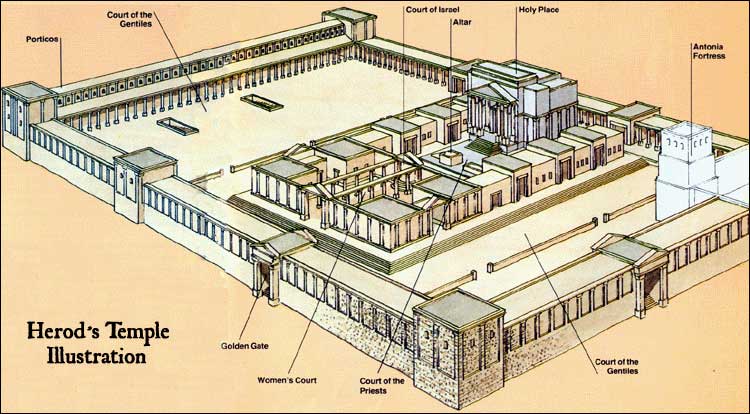
We discussed how the cursing of the fig tree was Jesus' commentary of nationalism/racism/prejudice, because fig trees are often a symbol of national Israel. That the fig tree cursing story is "cut in two" by the inserting/"intercalating" of the temple cleansing, suggested that Jesus action in the temple was also commentary on prejuidice...which become more obvious when we realize the moneychangers and dovesellers are set up in the "court of the Gentiles," which kept the temple from being a "house of prayer FOR ALL NATIONS (GENTILES).
This theme becomes even more clear when we note that Jesus statement was a quote from Isaiah 56:68, and the context there (of course) is against prejudice in the temple.
double paste: Often, two Scriptures/texts are combined into a new one. Ex. : Jesus says “My house shall be a house of prayer for all nations, but you have made it a den of thieves.” The first clause (before the comma) is from Isaiah 56:6-8, and the second is from Jeremiah 7:11
hemistiche/ellipsis: when the last section of a well-known phrase is omitted foremphasis: Matthew says "My house shall be a house of prayer......," intentionally leaving out the "...for all nations" clause. ”
== class discussion on Matthew 21 (
Three Acted Parables about Nationalism)
especially focusing on the temple tantrum.. Note, the chapter started with "Palm Sunday": --
we watched the "Lamb of God" video and discussed how it was actually a nationalistic misunderstanding. If Jesus showed up personally in your church Sunday, would you wave the American flag at him, and ask him to run for president?Post your answer in the comments section below...at bottom of this post
a)Van Der Laan:
Jesus on his way to Jerusalem
On the Sunday before Passover, Jesus came out of the wilderness on the eastern side of the Mount of Olives (just as the prophecy said the Messiah would come).
People spread cloaks and branches on the road before him. Then the disciples ?began, joyfully, to praise God in loud voices for all the miracles they had seen? (Luke 19:37). The crowd began shouting, ?Hosanna,? a slogan of the ultra-nationalistic Zealots, which meant, ?Please save us! Give us freedom! We?re sick of these Romans!? The Palm Branches
The people also waved palm branches, a symbol that had once been placed on Jewish coins when the Jewish nation was free. Thus the palm branches were not a symbol of peace and love, as Christians usually assume; they were a symbol of Jewish nationalism, an expression of the people?s desire for political freedom __LINK to full article
b)FPU prof Tim Geddert:
Palm Sunday is a day of pomp and pageantry. Many church sanctuaries are decorated with palm fronds. I’ve even been in a church that literally sent a donkey down the aisle with a Jesus-figure on it. We cheer with the crowds—shout our hosannas—praising God exuberantly as Jesus the king enters the royal city.
But if Matthew, the gospel writer, attended one of our Palm Sunday services, I fear he would respond in dismay, “Don’t you get it?” We call Jesus’ ride into Jerusalem “The Triumphal Entry,” and just like the Jerusalem crowds, we fail to notice that Jesus is holding back tears.
Jesus did not intend for this to be a victory march into Jerusalem, a political rally to muster popular support or a publicity stunt for some worthy project. Jesus was staging a protest—a protest against the empire-building ways of the world. LINK: full article :Parade Or Protest March
c)From Table Dallas:
Eugene Cho wrote a blog post back in 2009 about the irony of Palm Sunday:
The image of Palm Sunday is one of the greatest ironies. Jesus Christ – the Lord of Lords, King of Kings, the Morning Star, the Savior of all Humanity, and we can list descriptives after descriptives – rides into a procession of “Hosanna, Hosanna…Hosanna in the Highest” - on a donkey – aka - an ass.
He goes on to say it’s like his friend Shane Claiborne once said, “that a modern equivalent of such an incredulous image is of the most powerful person in our modern world, the United States President, riding into a procession…on a unicycle.”
Some revolutionaries from all nations overlooking the Temple Mount, on our 2004 trip
I have actually heard people say they fear holding a bake sale anywhere on church property…they think a divine lightning bolt might drop.
Some go as far as to question the propriety of youth group fundraisers (even in the lobby), or flinch at setting up a table anywhere in a church building (especially the “sanctuary”) where a visiting speaker or singer sells books or CDs. “I don’t want to get zapped!”
All trace their well-meaning concerns to the “obvious” Scripture:
"Remember when Jesus cast out the moneychangers and dovesellers?"
It is astounding how rare it is to hear someone comment on the classic "temple tantrum" Scripture without turning it into a mere moralism:
"Better not sell stuff in church!” Any serious study of the passage concludes that the most obvious reason Jesus was angry was not commercialism, but:
racism.
I heard that head-scratching.
The tables the Lord was intent on overturning were those of prejudice. I heard that “Huh?”
A brief study of the passage…in context…will reorient us:
Again, most contemporary Americans assume that Jesus’ anger was due to his being upset about the buying and selling. But note that Jesus didn't say "Quit buying and selling!” His outburst was, "My house shall be a house of prayer for all nations" (Mark 11:17, emphasis mine). He was not merely saying what he felt, but directly quoting Isaiah (56:6-8), whose context is clearly not about commercialism, but adamantly about letting foreigners and outcasts have a place in the “house of prayer for all nations”; for all nations, not just the Jewish nation. Christ was likely upset not that moneychangers were doing business, but that they were making it their business to do so disruptfully and disrespectfully in the "outer court;” in the “Court of the Gentiles” (“Gentiles” means “all other nations but Jews”). This was
the only place where "foreigners" could have a “pew” to attend the international prayer meeting that was temple worship. Merchants were making the temple "a den of thieves" not (just) by overcharging for doves and money, but by (more insidiously) robbing precious people of “all nations” a place to pray, and the God-given right to "access access" to God.
Money-changing and doveselling were not inherently the problem. In fact they were required; t proper currency and “worship materials” were part of the procedure and protocol. It’s true that the merchants may have been overcharging and noisy, but it is where and how they are doing so that incites Jesus to righteous anger.
The problem is never tables. It’s what must be tabled:
marginalization of people of a different tribe or tongue who are only wanting to worship with the rest of us.
In the biblical era, it went without saying that when someone quoted a Scripture, they were assuming and importing the context. So we often miss that Jesus is quoting a Scripture in his temple encounter, let alone which Scripture and context. Everyone back then immediately got the reference: “Oh, I get it, he’s preaching Isaiah, he must really love foreigners!”:
“Foreigners who bind themselves to the Lord…allwho hold fast to my covenant-these I will bring to my holy mountain and give themjoy in my house of prayer. Theirburnt offerings and sacrifices will be accepted on my altar; for my house will be called a house of prayer for all nations.” (Isaiah 56:6-8, emphases mine)
“The classic interpretation suggests that people were buying and selling stuff in God’s house, and that’s not okay. So for churches that have a coffee bar, Jesus might toss the latte machine out the window.
I wonder if something else is going on here, and I wonder if the Old Testament passage Jesus quotes informs our understanding?…Here’s the point:
Those who are considered marginalized and not worthy of love, but who love God and are pursuing Him, are not out. They’re in..
Those who are considered nationally unclean, but who love God and are pursuing Him, are not out. They’re in.
God’s heart is for Christ’s Church to become a light to the world, not an exclusive club. And when well-meaning people block that invitation, God gets really, really ticked.”
How often have you heard the Scripture about “speak to the mountain and it will be gone” invoked , with the “obvious” meaning being “the mountain of your circumstances” or “the mountain of obstacles”? Sounds good, and that will preach. But again, a quick glance at the context of that saying of Jesus reveals nary a mention of metaphorical obstacles. In fact, we find it (Mark 11:21-22) directly after the “temple tantrum.” And consider where Jesus and the disciples are: still near the temple, and still stunned by the “object lesson” Jesus had just given there about prejudice. And know that everyone back then knew what most today don’t: that one way to talk about the temple was to call it “the mountain” (Isaiah 2:1, for example: “the mountain of the Lord’s temple”) .
Which is why most scholars would agree with Joel Green and John Carroll:
“Indeed, read in its immediate context, Jesus’ subsequent instruction to the disciples, ‘Truly I tell you, if you say to this mountain..’ can refer only to the mountain on which the temple is built!... For him, the time of the temple is no more.” (“The Death of Jesus in Early Christianity,” p. 32, emphasis mine).
In Jesus’ time, the temple system of worship had become far too embedded with prejudice. So Jesus suggests that his followers actually pray such a system, such a mountain, be gone.
Soon it literally was.
In our day, the temple is us: the church.
And the church-temple is called to pray a moving, mountain-moving, prayer:
“What keeps us from being a house of prayer for all nations?”
Or as Gary Molander summarizes:
“Who can’t attend your church?” -Dave Wainscott, Salt Fresno Magazine --
-------------------- the money changers were in the Gentile courts of the temple..Jesus' action opened up the plazaso that Gentiles could pray." -Kraybill, Upside Down Kingdom, p. 151.
-----
--
FOR ALL THE NATIONS: BY RAY VANDER LAAN:
Through the prophet Isaiah, God spoke of the Temple as ?a house of prayer for all the nations? (Isa. 56:7). The Temple represented his presence among his people, and he wanted all believers to have access to him.
Even during the Old Testament era, God spoke specifically about allowing non-Jewish people to his Temple: ?And foreigners who bind themselves to the Lord ? these I will bring to my holy mountain and give them joy in my house of prayer? (Isa. 56:7).
Unfortunately, the Temple authorities of Jesus? day forgot God?s desire for all people to worship freely at the Temple. Moneychangers had settled into the Gentile court, along with those who sold sacrificial animals and other religious merchandise. Their activities probably disrupted the Gentiles trying to worship there.
When Jesus entered the Temple area, he cleared the court of these moneychangers and vendors. Today, we often attribute his anger to the fact that they turned the temple area into a business enterprise. But Jesus was probably angry for another reason as well.
As he drove out the vendors, Jesus quoted the passage from Isaiah, ?Is it not written: ?My house will be called a house of prayer for all nations??? The vendors had been inconsiderate of Gentile believers. Their willingness to disrupt Gentile worship and prayers reflected a callous attitude of indifference toward the spiritual needs of Gentiles.
Through his anger and actions, Jesus reminded everyone nearby that God cared for Jew and Gentile alike. He showed his followers that God?s Temple was to be a holy place of prayer and worship for all believers. - Van Der Laan
,, Jesus’ entrance into Jerusalem actually echoes a custom that would have been familiar to people living in the Greco-Roman world, when the gospels were written.
Simon Maccabeus was a Jewish general who was part of the Maccabean Revolt that occurred two centuries before Christ, which liberated the Jewish people from Greek rule. Maccabeus entered Jerusalem with praise and palm leaves—making a beeline to the Temple to have it ritually cleansed from all the idol worship that was taking place. With the Jewish people now bearing the brunt of yet another foreign ruler (this time the Romans), Jesus’ parade into Jerusalem—complete with praise and palm leaves—was a strong claim that He was the leader who would liberate the people.
Except that in this case, Jesus isn’t riding a military horse, but a humble donkey. How triumphant is Jesus’ “triumphant entry”—on a donkey He doesn’t own, surrounded by peasants from the countryside, approaching a bunch of Jews who want to kill Him?
And so He enters the Temple. In the Greco-Roman world, the classic “triumphant entry” was usually followed by some sort of ritual—making a sacrifice at the Temple, for example, as was the legendary case of Alexander the Great. Jesus’ “ritual” was to attempt to drive out those making a profit in the Temple.
The chaotic commerce taking place—entrepreneurs selling birds and animals as well as wine, oil and salt for use in Temple sacrifices—epitomized much more than general disrespect. It also symbolised a whole system that was founded on oppression and injustice.
In Matthew, Mark and John, for example, Jesus chose specifically to overturn the tables of the pigeon sellers, since these were the staple commodities that marginalised people like women and lepers used to be made ritually clean by the system. Perhaps it was this system that Jesus was referring to when He accused the people of making the Temple “a den of robbers” (Mt 21.13; Mk 11.17; Lk 19.46). Andreana Reale
--
So Jesus is intertexting and ddouble pasting two Scriptures and making a new one.
But he leaves out the most important part "FOR ALL NATIONS"...which means he is hemistiching and making that phrase even more significant by it's absence, -----
"If anyone says to this mountain, 'Go throw yourself into the sea, and does not doubt in his heart but believes that what he says will happen, it will be done.' (Mark 11:23). If you want to be charismatic about it, you can pretend this refers to the mountain of your circumstances--but that is taking the passage out of context. Jesus was not referring to the mountain of circumstances. When he referred to 'this mountain,' I believe (based in part on Zech 4:6-9) that he was looking at the Temple Mount, and indicating that "the mountain on which the temple sits is going to be removed, referring to its destruction by the Romans.. Much of what Jesus said was intended to clue people in to the fact that the religous system of the day would be overthrown, but we miss much if it because we Americanize it, making it say what we want it to say, We turn the parables into fables or moral stories instead of living prophecies that pertain as much to us as to the audience that first heard them." -Steve Gray, "When The KIngdom Comes," p..31
“Indeed, read in its immediate context, Jesus’ subsequent instruction to the disciples, ‘Truly I tell you, if you say to this mountain..’ can refer only to the mountain on which the temple is built!... For him, the time of the temple is no more.”
"The word about the mountain being cast into the sea.....spoken in Jerusalem, would naturallly refer to the Temple mount. The saying is not simply a miscellaneous comment on how prayer and faith can do such things as curse fig trees. It is a very specific word of judgement: the Temple mountain is, figuratively speaking, to be taken up and cast into the sea."
By intercalating the story of the cursing of the fig tree within that of Jesus' obstruction of the normal activity of the temple, Mark interprets Jesus' action in the temple not merely as its cleansing but its cursing. For him, the time of the temple is no more, for it has lost its fecundity. Indeed , read in its immediate context, Jesus' subsequent instruction to the disciples, "Truly I tell you, if you say to this mountain, 'Be taken up and thrown into the sea'" can refer only to the mountain on which the temple is built!
What is Jesus' concern with the temple? Why does he regard it as extraneous to God's purpose?
Hints may be found in the mixed citation of Mark 11:17, part of which derives from Isaiah 56:7, the other from 11:7. Intended as a house of prayer for all the nations, the temple has been transformed by the Jewish leaders in Jerusalem into a den of brigands. That is, the temple has been perverted in favor of both socioreligious aims (the exclusion of Gentiles as potential recipients of divine reconciliation) and politico-economic purposes (legitimizing and
consolidating the power of the chief priests, whose teaching might be realized even in the plundering of even a poor widow's livelihood-cf 12:41-44)....
...In 12:10-11, Jesus uses temple imagery from Psalm 118 to refer to his own rejection and vindication, and in the process, documents his expectation of a new temple, inclusive of 'others' (12:9, Gentiles?) This is the community of his disciples. -John T, Carroll and Joel B. Green, "The Death of Jesus in Early Christianity," p. 32-33
FIG TREE: FOLLOW SCRIPTURES WHERE IT IS A SYMBOL OF NATIONIAL ISRAEL/jERUSALEM/GOD'S BOUNDED SET:
=
Fig Tree:
s to the significance of this passage and what it means, the answer to that is again found in the chronological setting and in understanding how a fig tree is often used symbolically to represent Israel in the Scriptures. First of all, chronologically, Jesus had just arrived at Jerusalem amid great fanfare and great expectations, but then proceeds to cleanse the Temple and curse the barren fig tree. Both had significance as to the spiritual condition of Israel. With His cleansing of the Temple and His criticism of the worship that was going on there (Matthew 21:13; Mark 11:17), Jesus was effectively denouncing Israel’s worship of God. With the cursing of the fig tree, He was symbolically denouncing Israel as a nation and, in a sense, even denouncing unfruitful “Christians” (that is, people who profess to be Christian but have no evidence of a relationship with Christ).
The presence of a fruitful fig tree was considered to be a symbol of blessing and prosperity for the nation of Israel. Likewise, the absence or death of a fig tree would symbolize judgment and rejection. Symbolically, the fig tree represented the spiritual deadness of Israel, who while very religious outwardly with all the sacrifices and ceremonies, were spiritually barren because of their sins. By cleansing the Temple and cursing the fig tree, causing it to whither and die, Jesus was pronouncing His coming judgment of Israel and demonstrating His power to carry it out. It also teaches the principle that religious profession and observance are not enough to guarantee salvation, unless there is the fruit of genuine salvation evidenced in the life of the person. James would later echo this truth when he wrote that “faith without works is deadt also teaches the principle that religious profession and observance are not enough to guarantee salvation, unless there is the fruit of genuine salvation evidenced in the life of the person. James would later echo this truth when he wrote that “faith without works is dead” (James 2:26). The lesson of the fig tree is that we should bear spiritual fruit (Galatians 5:22-23), not just give an appearance of religiosity. God judges fruitlessness, and expects that those who have a relationship with Him will “bear much fruit” (LINK
T
--
__
A good video from Ray Van Der Laan on Jesus vs. Herod below.
I often show this in Bible classes to show how much can be loaded into one verse that we gloss over, as it looks like just a boring historical marker.
But Matt. 2:1, "In the days of Herod, Jesus was born" is quite loaded, once we get the historical context.
Nobody has that verse on a bumper sticker or T-shirt, but it is full of meaning.
On our last trip to Israel, right outside our hotel window, we could see not only Bethlehem, but the Herodian,,,as you can see in this clip, every morning when we opened the blinds, we inevitably saw (as he would have wanted it) Herod's Herodian.
Once you have seen the Van Der Laan video below, you'll get how powerful and prophetic object lesson that was.
Related post here.
Edited transcript of the video here.




No comments:
Post a Comment